
Where to Bet on F1 in the UK: A Markets-First Guide for 2026
 Available in US
Plain numbers. Sharp markets. Real F1 edge.

Why this guide exists: the state of F1 wagering in Britain
22.5M
UK adults who gamble regularly
£150
Net deposit threshold for affordability checks over 30 rolling days
16.7M
UK-based Formula 1 fans heading into 2026
I have been pricing Formula 1 markets for British punters for eight years, and I will tell you plainly: most of what you find when you search "where to bet on F1" is written for advertisers, not for you. The pages are built around welcome-offer carousels and tidy operator tables, with the actual mechanics of the sport — tyre cliffs, pit-window maths, the way an outright price drifts through a sprint weekend — relegated to filler paragraphs lifted from a season that ended two years ago.
Britain sits in an unusual position. Roughly 22.5 million adults place a bet on a regular basis, which makes ours the largest regulated online gambling market in the world. At the same time, the Gambling Commission has reshaped what a punter actually experiences at the point of placing a wager — affordability checks above £150 in net deposits over a rolling 30 days, a statutory levy on operators that began billing in autumn 2025, and fresh rules around payment and stake limits. If you stake regularly on F1, every one of those changes touches the way your account behaves.
The sport itself has not stood still either. Formula 1's UK fanbase now sits at 16.7 million, the 2025 season ended with Lando Norris taking the title by a two-point margin in a three-way fight that ran to Abu Dhabi, and the 2026 regulation reset has scrambled the long-horizon markets that punters traditionally lock in over the winter. What I want this guide to do is treat you as someone capable of weighing those moving parts — operator landscape, market types, in-play behaviour, regulation, race-day strategy — and pick where to put your stake from a position of understanding rather than affiliation.
How to use this page. Each major section gives you the lay of the land and then points to a dedicated cluster article when the detail spills past what one section can carry. Treat the cross-links as the technical appendix to this overview.
The five-minute briefing for UK F1 punters
- Britain runs the largest regulated online gambling market in the world at £15.6 billion gross gambling yield, but F1 contributes around 0.4% of global betting turnover despite an 827-million fanbase.
- The 2025 regulatory reset is now fully live: £150 net-deposit threshold triggers affordability checks, the statutory levy began billing in autumn 2025, and online slot stake limits sit at £5 for over-25s and £2 for 18 to 24-year-olds.
- The value in F1 betting typically sits in head-to-head matchups, qualifying markets and in-play props rather than race-winner outrights — particularly on Sprint weekends where pricing windows are short.
- Tyre degradation, weather, and pit-window arithmetic are the three inputs that move F1 prices most. Read FP2 long-run pace before you read any line.
- Channelisation is around 91%, which means the protective framework around licensed operators is exactly the floor you want underneath you. Check the UKGC licence before you deposit.
The UK betting landscape around F1
The first time I tried to estimate what share of British gambling money actually flows through F1, I came up short by an order of magnitude. The numbers underneath the headlines tell a different story than the marketing suggests, and once you see them, the operator landscape stops looking like a uniform sea of "best F1 sites" and starts resolving into specific commercial categories with specific behaviour patterns.

Britain's regulated gambling market produces a gross gambling yield of roughly £15.6 billion across all verticals, dropping to £11.5 billion when you strip out the National Lottery. Remote — meaning online — operations account for £7.8 billion of that and grew 13.1% year on year in the most recent financial year. Real-event betting, the segment that contains F1 alongside football, horseracing and everything else live, runs at £596 million per quarter of online gross gambling yield. Average monthly active online accounts now sit at 13.5 million.
£15.6B
Total GGY of the UK regulated gambling market
Source: Gambling Commission CEO Briefing 2025
£7.8B
Remote sector GGY in the most recent financial year, up 13.1% year on year
Source: Industry Statistics Annual Report
13.5M
Average monthly active UK online gambling accounts
Source: Market Overview Operator Data to March 2025
Inside that picture, F1 is structurally tiny. Motorsport in aggregate represents about 0.4% of global betting turnover even with a fanbase that crossed 827 million in 2025. The headline reason is liquidity: football carries the deepest order books, horseracing carries depth built over a century of British retail tradition, and F1 sits in the niche-but-passionate category alongside golf and tennis. The practical consequence for you as a punter is that F1 prices are wider, books update them less frequently, and the value windows open and close faster.
Andrew Rhodes, chief executive of the Gambling Commission, framed the wider context bluntly: "Some 22 and a half million consumers gamble on a regular basis in this country. It is a significant economic and social activity that people take part in and continues to be a mass participation exercise but one we all know brings its challenges." That dual character runs through every regulatory decision currently rolling out, and it explains why a sport with 16.7 million British fans still gets treated by some operators as a secondary product behind Saturday football.
The operator field is broad, but the F1 product quality varies enormously. Some books treat the championship as a flagship vertical with deep in-play coverage, props on safety-car counts and fastest-lap markets that price two hours before lights out. Others list outrights, race winner, and head-to-head — and that is it. Knowing which is which is half the battle.
From the size of the pot to where the pot is actually poured.
Where UK bettors place F1 wagers: the operator categories
A friend asked me last summer which book to use for the British Grand Prix. I asked her how she planned to bet — pre-race only or live during the race, phone or laptop, outrights through the season or one-off race wagers — and she stared at me like I had asked her to recite the FIA technical regulations. But that conversation is exactly the work you have to do before opening an account, because the UK operator field divides into categories that behave very differently for F1.
The non-negotiable first filter is licensing. Any operator legally taking your bet must hold a current Gambling Commission licence, and that licence is what attaches you to the consumer protections — affordability framework, complaints route, dispute resolution. There are 8,234 licensed gambling premises in Britain at the most recent count, including 5,825 betting shops, but the licensed online field is what concerns us. The Commission is not passive: in the most recent financial year it issued 480 cease-and-desist notices, removed 104,192 URLs through search engines, and forced 504 sites offline by geographic block or full takedown.
The licence check is the floor, not the ceiling. Before you deposit a penny, find the operator's UK Gambling Commission account number on their footer and verify it on the public register. If it is missing or does not match, the site is either offshore or in the process of becoming a problem.
High-street operators with digital arms
The names you know from British high streets — long-established bookmaker brands with retail estates — moved online a decade ago and still carry the deepest combined customer pools. Their F1 product tends to be solid rather than spectacular: race winner, championship outrights, podium, fastest lap, head-to-head, and a smattering of specials. In-play is usually present but conservative. Where these operators excel is process: settlement is predictable, KYC is competent, and the dispute route is well-worn.
Digital-first sportsbooks
The digitally born or digitally pivoted operators built their model around online wagering. The F1 product here is often broader on paper — more obscure props, more in-play markets, deeper qualifying coverage — though "broader" does not automatically mean "better priced". This is where you find bet builders that allow same-race multis, live-streaming partnerships, and the kind of cash-out price discipline that comes from running latency-sensitive trading desks.
Exchange platforms
Peer-to-peer exchanges, where you bet against other punters rather than the house, have a niche but committed F1 following. The commission model and tight pricing on liquid drivers can be a genuine edge during qualifying and the first ten laps of a race. The trade-off is liquidity drop on midfield drivers and on Sprint weekends, where you can find the queue empty at the price you want.
Specialist horseracing and motorsport books
A handful of operators carry deep heritage in one or two sports and lean into specialist racing markets, including some F1-focused promotions. Their F1 each-way terms and outright depth can be sharper than the mass-market field, particularly during the European leg of the calendar.
Grainne Hurst, who took over as chief executive of the Betting and Gaming Council in 2024, put the membership scale into perspective: "This is a crucial time for the BGC's diverse and growing membership, which supports 110,000 jobs, and caters to millions of customers who enjoy a bet each month in the UK." That diversity is the practical reason you should treat operator selection as a deliberate choice rather than a default.
F1 betting markets at a glance
I will admit a small heresy: the race-winner market is overrated for most punters. Yes, it is the headline. But the value in F1 typically lives slightly off-centre — top-six finishes, qualifying head-to-heads, fastest-lap markets that books haven't fully repriced after late-stint developments. To find that value you need to understand what is actually on offer, and there are more shapes of F1 bet than the average homepage suggests.
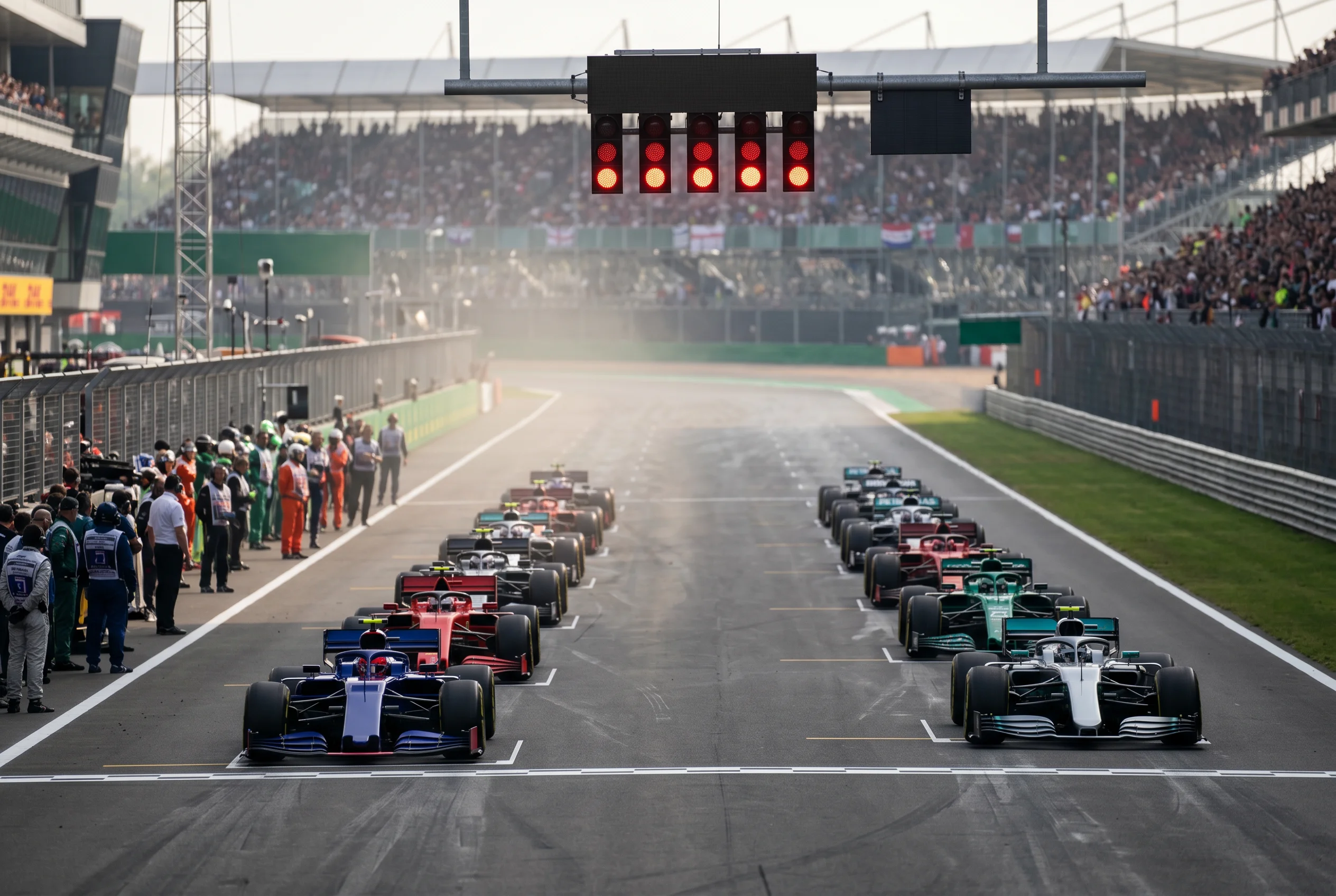
Real-event betting overall produces about £596 million per quarter in online gross gambling yield across all sports in the UK, and F1's contribution sits inside that figure as a small but resilient slice. The market is supported by a fan base where roughly 28% of F1 followers have placed an online sports bet in the past 12 months — a participation rate that outstrips fans of several major US leagues.
Outright and futures markets
The two season-long markets — Drivers' Championship and Constructors' Championship — are where antepost punters live. Prices open weeks before the season, drift through pre-season testing, and then move sharply over the first three rounds as the field reveals itself. Locked stakes are a structural feature here: you cannot easily get out of an outright bet for months. I cover the granular mechanics in the detailed markets explainer, including how books handle dead-heat scenarios and the practical effect of the 2025 three-way title fight on outright pricing models.
Race-day markets
The single-race menu typically runs: race winner, podium finish, top-six finish, points finish, fastest lap, pole position, qualifying winner, and head-to-head matchups between named drivers. Each one carries different settlement quirks. A podium bet usually settles on the chequered flag, but disqualifications occasionally adjust outcomes after the fact. A fastest-lap bet at some books voids if no driver scores the bonus point; at others, it pays on the literal fastest lap regardless of points. Ten minutes of terms-and-conditions reading once saves you arguments later.
Pre-race markets
Pricing reflects qualifying position, free-practice long-run pace, weather forecast and historical track form. Markets stay open until lights out. Liquidity is widest, books are most aggressive on pricing. This is where the bulk of recreational money goes.
In-play markets
Prices update lap by lap, with brief suspensions during incidents and safety-car deployments. Liquidity narrows on niche markets. Roughly 21% of UK online gamblers place live bets during events, rising to 37% among 18 to 24-year-olds. Live wagering is now the leading global sports betting segment.
Props, specials and head-to-heads
Props and specials — safety-car-yes-or-no, number of safety cars, first retirement, manufacturer of the winning car, margin of victory — vary wildly by operator. Some are sharply priced; some exist mostly for engagement. Treat them as the dessert menu after you understand the main markets.
The market I direct newcomers to most often is head-to-heads. They strip out half the variance by isolating two drivers — typically teammates — and asking which finishes ahead. Qualifying head-to-heads are the cleanest reads because strategy distortion is minimal in a one-lap shootout. As Mark Hughes, the senior analyst at The Race, put it: "Tyre degradation is track-specific. Knowing where grip drops off lets you bet with confidence." That pricing edge is sharper in head-to-heads than almost anywhere else.
Odds formats UK punters will encounter
A punter once messaged me, exasperated, after taking a 4/6 price on a podium finish. "I staked a tenner," he said, "and I got back less than my stake." He had not, of course — he had received his stake back plus £6.67 in profit, for a total return of £16.67. But the fractional display had genuinely confused him about whether 4/6 meant winning or losing money. If that exchange feels familiar, you are not unusual.
British books default to fractional odds, while most of the rest of the world defaults to decimal. Both are saying the same thing. The skill is converting between them quickly enough that when a market mover puts a driver into 11/4 in the time it takes to scroll, you know whether that is shorter or longer than 3.75.
Worked conversion: 4/6 fractional
Fractional: 4/6 means £4 profit on a £6 stake.
Decimal: (4 ÷ 6) + 1 = 1.667. A £10 stake returns £16.67.
Implied probability: 1 ÷ 1.667 = 0.60, or 60% chance of winning.
Worked conversion: 10/1 fractional
Fractional: 10/1 means £10 profit on a £1 stake.
Decimal: (10 ÷ 1) + 1 = 11.00. A £10 stake returns £110.
Implied probability: 1 ÷ 11.00 = 0.091, or roughly 9.1%.
Two practical points from those examples. First, the lower the implied probability, the higher the price — fairly obvious, but worth sitting with: a 60% chance returns £6.67 profit on £10 staked while a 9.1% chance returns £100 profit on the same stake. The market pays you to take the longer odds because it considers them less likely. Second, every odds display — fractional, decimal, American moneyline, occasionally Hong Kong or Indonesian — converts to the same underlying implied probability. Master the conversion and you remove the format from your decision-making.
Implied probability — the percentage chance of an outcome that the offered odds represent. Calculated as 1 divided by the decimal price.
Overround — the bookmaker's built-in margin. The sum of implied probabilities for all possible outcomes in a market exceeds 100%, and the excess is the operator's theoretical edge.
A 5/2 price translates to a decimal price of 3.50, which implies a 28.6% chance — not the intuitive 40% that fractional displays sometimes suggest to people who default to mental percentages. That gap is exactly where the bookmaker's margin lives. For deeper drills on conversion mechanics and the wider use of implied probability for value detection, the work in the odds-formats and value manual covers the maths step by step, including the overround calculation for typical F1 outright markets.
The "fractional default" is a British tradition, not a regulatory requirement, and every UK operator allows you to toggle decimal display from a settings menu. Switch it on if you bet across multiple formats or use overseas data sources. The toggle does not change a single price; it changes only how you read them.
Now from how prices are written down to how they move once the lights go out.
Apexodd · interactive
The Ladder Tax
British books do not quote every price. They quote rungs. This works out what one rung of that ladder is worth, and how much of an F1 overround is arithmetic rather than appetite.
These two settings apply to everything below. The second one is the whole argument: test your own book by watching whether a price ever rounds up.
The rung
Pick a price. The ladder either side of it is drawn as it would be chalked up — longer prices higher. Everything on the right is what a single step is worth to you.
This price
9.00
implied 11.11% · returns £90.00
One rung up
9/1
+6.25% profit · +£5.00
One rung down
15/2
−5.88% profit · −£5.00
Average rounding loss on this rung
2.68%
of expected value, if the true price lands anywhere inside this gap
What a rung is worth
The gaps are not even, and the two natural ways of measuring them disagree with each other. Switch the ruler and watch the shape invert.
Coarsest step by profit
—
one rung changes your winnings by this much
Coarsest step by probability
—
one rung moves the implied chance by this much
The F1 midfield band (12/1–33/1)
—
average rounding loss per bet struck in that band
Each-way punters pay it twice over: at 1/5 place terms, the place part of 33/1 and 40/1 are 6.6/1 and 8/1 — the same single rung, worth a fifth as much per pound but applied to the half of your stake most likely to return.
The fair-book test
Here is a bookmaker with no margin at all: a 22-car field priced perfectly, the twelve shortest prices written up on the ladder, the rest of the field counted at its exact true chance so nothing is smuggled in through the tail. The overround it still displays is pure arithmetic.
Zero-margin book, written on this ladder
104.6%
4.6 points of overround created by rounding alone
Where your book's margin comes from
Fair price → the rung it gets chalked as
Your race
The pre-race checklist asks you to sum the implied probabilities of the top five and judge the number. Type your book's five shortest prices — fractional (11/4) or decimal (3.75) — and the sum arrives with a reference point beside it.
| Driver | Your price | Decimal | Implied | One rung up | Worth on stake |
|---|
Your top five sum to
—
implied probability, as displayed
Zero-margin book, same shape, same ladder
—
the honest reference for that sum
Charged above the ladder
—
the part that is the trading desk, not the arithmetic
Live and in-play F1 betting: what changes during a Grand Prix
Imagine you have a small pre-race wager on the safety car appearing. Twelve laps in, a driver clips a kerb at Becketts and your safety-car-yes price is settled. Fifteen minutes later, the leader pits under a virtual safety car, the in-play race-winner market briefly suspends, and when it reopens the prices have shifted by something like 30%. If you have not been watching, you have already missed two markets that resolved while you checked your phone. That is in-play F1: kinetic, fast, and unforgiving of attention lapses.
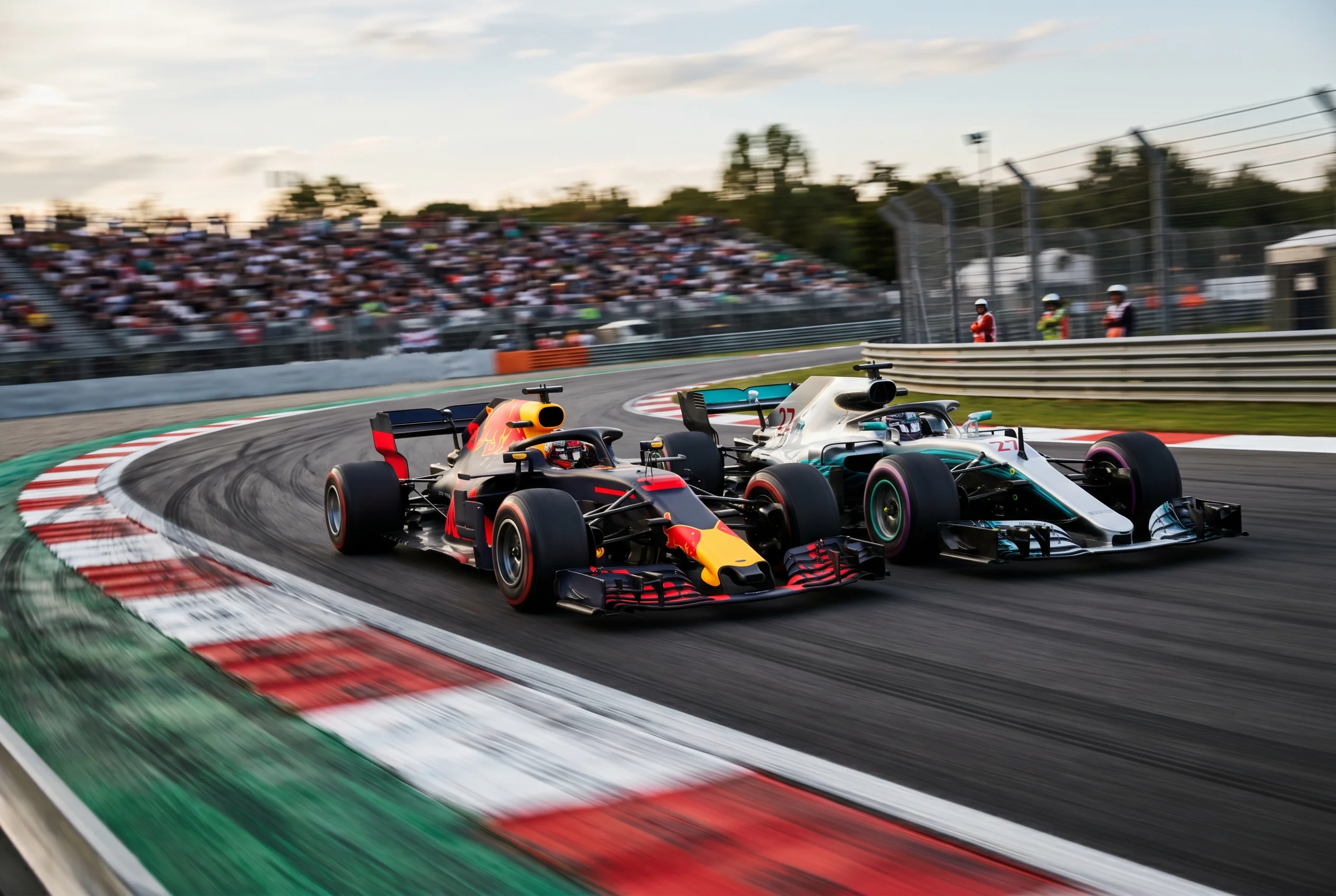
About 21% of UK online gamblers bet in-play during sporting events, rising to 37% among 18 to 24-year-olds. Live wagering is now the single largest segment of the global sports betting market, having overtaken pre-event for the first time. Inside F1, the live-betting experience has matured noticeably over the last three seasons, with the better operators now offering qualifying-style in-play markets — next driver to pit, lap of next pit stop, top-three after the next round of stops — that did not exist when I started covering the sport.
What gets paused and why
Bookmakers suspend live markets when material information arrives faster than they can reprice. The classic triggers are virtual safety cars, full safety cars, red flags, and confirmed incidents. The suspension is not punitive: it is the trading team buying twenty seconds to re-baseline the model. When markets reopen, expect movement, sometimes substantial.
37%
Share of UK online gamblers aged 18–24 who place live bets during events
Source: BettingSpot UK Betting Industry Statistics
Cash-out as a structural feature
Cash-out — the option to settle a bet early at a price the bookmaker offers — sits inside almost every in-play product. The price is not "fair value"; it is the operator's buyback, and it includes a margin. Cash-out is occasionally a defensible choice — typically when a safety car has materially compressed your downside, or when an outright is no longer a realistic win and you want to recover residual value — and frequently a tax on impatience. A short example: a £10 race-winner bet at 8/1 on a midfield driver, who has somehow ended up second on lap 30 of 53. The book offers £42 cash-out. The fair implied price of winning from that position depends entirely on tyre offset and pit cycle remaining — and that is the calculation you are making instead of the operator's.
In-play-only markets
A subset of markets only opens after lights out. Next driver to pit, lap of first retirement, fastest lap after lap X, next-driver-to-overtake, virtual safety car yes/no in the next ten laps — these are sometimes the sharpest pricing on the book because the trading window is short. I have found more value here than anywhere else in F1, but the trade-off is concentration: in-play-only markets reward people watching with telemetry on a second screen, not casual viewers.
The full mechanics of live behaviour — race-by-race phases, latency, cash-out maths — sit in the in-play and live F1 betting guide. For a first read, what you need to know is this: in-play is where the F1 market most resembles the sport itself — fast-moving, information-dense, and decided in fractions of a second.
UK regulation every F1 punter should know
An acquaintance who runs a small accounting practice asked me last March why his weekend deposit had triggered a request for bank statements. He stakes maybe £40 on a Grand Prix and was perplexed by the friction. The answer was straightforward: he had topped up two separate accounts within the same rolling month, the net deposits totalled north of £150, and his operator triggered an affordability check. None of this is hidden, but very little of it gets explained on the marketing pages.

The £150 affordability check
Since 28 February 2025, the trigger for what is now formally called a "financial vulnerability check" is net deposits exceeding £150 across a 30-day rolling window. "Net" matters: it accounts for withdrawals during the same period, so a punter who has banked winnings is treated differently from one who has only added funds. The check is meant to be frictionless in the majority of cases — open banking and credit-reference integration covers the bulk of the population without paperwork — and the Gambling Commission estimates only around 3% of active accounts encounter friction at this threshold. In practice, "frictionless" is uneven across operators while systems mature.
Operating cost of the framework. EY estimated the industry cost of running affordability checks at around £125 million annually, covering technology integration, credit-reference services and compliance staff. Andrew Rhodes has been frank about the friction: "We have got to tighten this up as it's just going to continue to be unhelpful." Translation: expect the implementation to keep evolving.
The statutory levy
From 1 September 2025, a statutory levy on gambling operators has been live, calculated as a percentage of gross gambling yield. The first invoices were issued in September and payment was due by 1 October. The levy funds research, education, and treatment for gambling-related harm, replacing the previous voluntary contribution model. The levy does not directly change anything you see on the bet slip, but it shapes the funding pool for the harm-reduction services you may encounter through GamCare, GamStop and the NHS National Centre for Gaming Disorders.
Online slot stake limits
The 2025 package also introduced stake caps on online slot games: £5 maximum per spin for adults 25 and over, and £2 maximum per spin for 18 to 24-year-olds. Slots are not F1 betting, but the rule matters because most operators that take your F1 wagers also offer casino verticals, and your account is the same account. The £2 cap for younger players is the first explicit age-banded stake limit in UK gambling regulation.
Payment rules
Credit cards have been banned from UK gambling since April 2020 — a useful piece of history when you encounter a payment-method dropdown that looks oddly narrow. Debit cards, e-wallets where available, and direct bank transfers cover the legal options. Source-of-funds requests are now routine above the £150 threshold and can include documentary evidence of income or savings.
~3%
Estimated share of active accounts that should encounter the financial vulnerability check threshold
Source: Gambling Commission position via iGaming Expert
The black market context
The UK has one of the highest channelisation rates in Europe — roughly 91% of gambling spend goes through licensed operators, compared to about 77% in Germany and around 50% in the Netherlands. The flip side is that the unregulated market still moves over £10 billion in stakes annually, with the Betting and Gaming Council estimating around 1.5 million British adults engage with offshore or black-market operators. The Gambling Commission's enforcement output — 480 cease-and-desist notices, 504 sites taken offline in the most recent year — is one reason channelisation has held.
The full regulatory landscape, including how each rule maps to specific punter scenarios and the documentation a UKGC operator will request during an affordability review, is in the gambling regulation guide for F1 bettors. The basic architecture: you are operating inside a framework that has changed substantially over the past 18 months, and the changes affect deposits, account verification, payment options and harm-reduction funding.
Reading the race: tyres, weather, pit windows
Here is the question I would put to anyone who tells me they "know F1 betting": what is the typical performance differential between a fresh medium tyre and a 15-lap-old soft at Barcelona, in the dry, on a hot afternoon? If you cannot give a ballpark answer — and there is one, around 1.2 to 1.5 seconds per lap before the soft cliffs — you are betting on prices without understanding what produces them. The good news is that ballpark is enough.
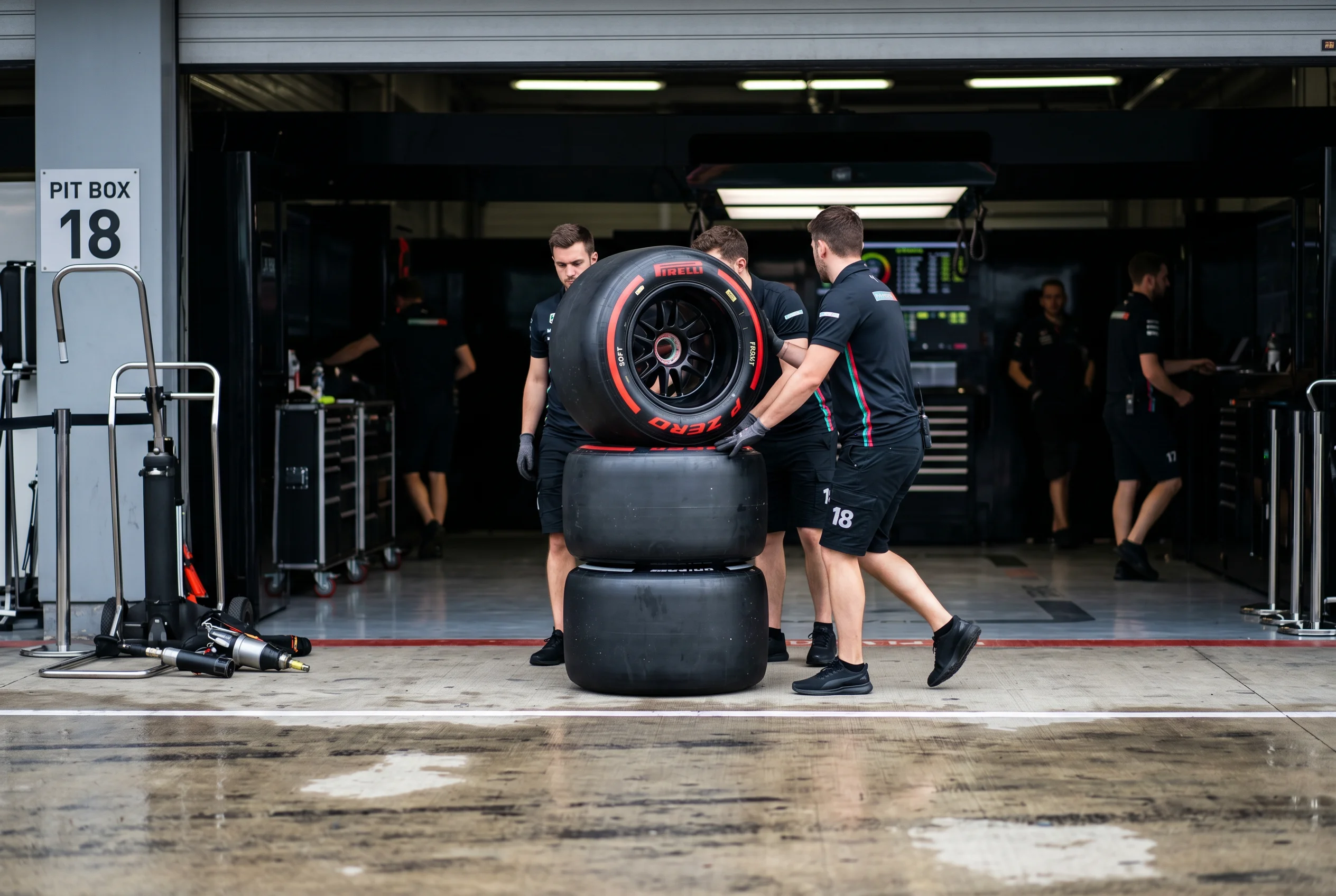
Stefano Domenicali summed up the texture of the 2025 season succinctly: "It was a phenomenal year. What was particularly incredible for me is that there were three different moments when everyone thought the championship was already decided." Three moments where the consensus crystallised and then dissolved — and at each, the betting market repriced violently. The punters who profited were not the ones with the strongest opinion; they were the ones with the most accurate picture of the underlying race conditions.
Tyre compounds and degradation
The Pirelli compound choice — soft, medium, hard — varies by Grand Prix, and the differential between each compound's pace and lifespan is the central pricing input for race winner, podium and head-to-head markets. A circuit like Barcelona punishes soft-tyre starts because the abrasive surface forces an early stop; a circuit like Monaco rewards them because overtaking is so difficult that track position outweighs strategic flexibility. The detail by circuit and compound, with worked examples on FP2 long-run pace, sits in the race strategy guide for bettors.
Weather as a price mover
Rain in the forecast moves outright prices more than almost any other single variable. The reason is not that rain favours specific drivers — the so-called "wet specialist" effect is real but smaller than the betting public assumes — but that rain widens the variance of outcomes. A 65% race-winner favourite at 1.4 might drift to 2.5 if the Sunday forecast hardens to "wet". You are paid more for taking that bet because the outcome is genuinely less predictable.
Undercut — pitting earlier than a car ahead and using fresh tyre pace on the next out-lap to leapfrog them when they pit.
Overcut — staying out longer than a car ahead, using the older tyre's residual pace and clean air to emerge ahead after they pit.
DRS — Drag Reduction System. An adjustable rear-wing flap that opens when a following car is within one second on a designated zone, reducing drag and aiding overtaking.
Parc fermé — the post-qualifying condition under which car setups cannot be changed without grid penalty.
Dirty air — the turbulent wake left by a car ahead, reducing downforce on the follower. Tracks with sustained high-speed corners punish dirty air more, depressing overtaking probabilities.
Pit-window arithmetic
The pit window is the lap range within which a driver realistically pits given tyre wear, traffic, and the cars around them. A team calculates three or four target windows for each driver, depending on incoming safety-car probability and the pace of cars on different strategies. You do not need to do this calculation yourself; you need to recognise when a driver is approaching or leaving their window so you can read the in-play price movement that follows. A car that pits unexpectedly early is signalling either undercut aggression or unexpected degradation — both move odds.
The 2025 season produced what is probably my favourite recent example of how race strategy shapes markets: Lando Norris winning the championship with three drivers tied on seven race wins each through the run-in. The countback margin was just two points after Abu Dhabi. For weeks the outright market priced Verstappen, Piastri and Norris in shifting orders depending on tyre management performance over the preceding three rounds. Strategy was not background noise; it was the price.
Sprint weekends and what they do to betting lines
The first Sprint weekend I covered as a markets analyst, I made the same mistake I see new punters make every season: I treated Saturday's Sprint as a small version of Sunday's race. Wrong format, wrong tyre stress, wrong incentive structure — and wrong prices, accordingly. Sprint weekends are a structurally distinct betting product that happens to be wrapped inside a familiar Grand Prix calendar slot.
Six of the 24 rounds on the 2026 calendar are Sprint weekends, and they are not going away. The fan data is unambiguous: 78% of F1 followers want the Sprint format to remain, and Sprint rounds produce roughly 8% more social media mentions and 4% greater social reach than non-Sprint events. From a commercial standpoint, F1 has every reason to keep Sprints in the calendar.
78%
Share of F1 fans who want Sprint weekends to remain in the calendar
Source: Formula 1 2025 Season Review
The betting consequences are concrete. The Sprint Shootout — a compressed qualifying session for the Sprint race — creates a parallel qualifying market that runs alongside Sunday's traditional qualifying. The Sprint race itself is roughly one-third race distance, which means tyre strategy plays a smaller role and starting position plays a much larger one. Variance is higher. Race-winner prices on the Sprint typically have wider overround than the Sunday race because liquidity is thinner and the trading window between Shootout and lights out is short.
There is also a feedback loop into the Sunday race that the casual punter misses. A driver who qualified poorly in Sunday's session because they used set-up compromises chasing Sprint pace will start out of position on Sunday too. A driver who took grid penalties on the Sprint weekend may serve them in a way that affects both Saturday and Sunday lines. The detailed mechanics of Sprint markets, Shootout-vs-qualifying differences, and how Sprint form does or does not carry into Sunday sit outside this overview, but the headline rule is: read both races as separate products even though they share a venue.
Stefano Domenicali described 2025 as "phenomenal" in part because Sprint weekends generated meaningful championship implications rather than serving as standalone exhibition races. That has changed how trading desks model the format — and therefore changed how prices behave in the run-up to a Sprint Saturday.
A pre-bet checklist for every Grand Prix weekend
I keep a printed copy of this checklist taped to the side of my monitor. It does not stop me losing — nothing does — but it stops me losing for stupid reasons, which is the only kind of loss that genuinely irritates me. Run through it before you place a single bet on a race weekend, and the friction will save you money over a season.
Six checks to run before lights out
- Licence and account status. Verify the operator's UKGC licence is current on the public register. Confirm your account has no pending verification requests that could delay a withdrawal. Note your rolling 30-day net deposit total relative to the £150 affordability threshold.
- FP2 long-run pace. Read race-pace data from Friday's second practice session, not the headline FP3 times. Long runs on representative fuel loads tell you more about Sunday than a single qualifying simulation.
- Weather forecast confidence window. Check the Sunday forecast at three time points — Friday morning, Saturday after qualifying, and Sunday morning. Pay attention to how much the forecast has shifted; volatility in the forecast itself is information.
- Grid penalties and parc fermé status. Confirm any announced grid penalties for power-unit changes, gearbox replacements, or stewarding decisions. A 10-place penalty for a front-row qualifier scrambles the entire race-winner market in ways the price may not have fully absorbed.
- Market overround comparison. Calculate the implied probabilities of the top five drivers in the race-winner market and check the sum against the typical UK overround band. If the book is significantly wider than peers, the price you are about to take has a bigger margin built in.
- Stake size against bankroll, not against ego. Define the stake as a percentage of your weekly betting bankroll before you see the price. Do not adjust it upward because the price looks tempting; that is the exact reverse of the discipline the affordability framework is asking you to internalise.
Two of those checks — the FP2 read and the forecast confidence window — are the ones I find punters skip most often, and they are also the ones with the highest information value. If you only run two checks, run those.
Staying in control: the responsible-gambling layer
I will be direct: this section is not boilerplate, and I do not want you to skim it. In eight years of writing about F1 markets, I have watched several friends and one colleague slide from recreational stakes into the kind of betting that hurt them, their families, and their finances. The signs were obvious in retrospect and almost invisible in real time. The framework I am about to describe is not a moral lecture; it is the practical layer that sits underneath every wager and exists to protect you when your own judgment is least reliable.
About 2.7% of British adults score in the problem-gambling band on the Problem Gambling Severity Index, with a further 3.1% in the at-risk category and 8.8% in low-risk. The harm distribution is not even — younger players are over-represented, and intensive online sports bettors more so — but the proportions tell you the absolute scale: most people who bet do so without harm, and a minority do not. Anna Hemmings, chief executive of the harm-support charity GamCare, framed the work clearly: "We welcome additional financial risk checks for people who are gambling more than they can afford. Last year, 75 per cent of those using our services told us they struggled with long-term financial difficulties."
The black-market context that I mentioned earlier — over £10 billion in stakes annually through unregulated operators, an estimated 1.5 million British adults engaging — is part of why the consumer-protection layer at licensed operators matters so much. Unregulated sites carry no affordability checks, no GamStop integration, no source-of-funds requests, and no dispute resolution route. The friction at licensed operators is the protection, not the punishment.
Tools available on every UKGC-licensed account. Deposit limits (daily, weekly, monthly) that can be lowered immediately and only raised after a cooling-off period. Loss limits and session-time limits, set per account. Self-exclusion via GamStop, which blocks your access across all UKGC-licensed sites for periods of six months, one year, or five years. Account closure on request. Reality checks that pop up at intervals you set.
If you recognise yourself in any of the patterns that responsible-gambling charities describe — chasing losses, betting amounts that affect bills or savings, hiding bets from family, returning to betting after a period of trying to stop — speak to GamCare, the National Gambling Helpline, or your GP. None of these conversations cost anything; none of them appear on your account; and none of them involve judgement. They exist because the people who built them know what the inside of this looks like.
F1 is a fantastic sport and a legitimate vertical for betting interest. The aim of this guide is to help you bet on it with skill and within means. Those two things have to coexist or neither lasts.
Frequently asked questions
Is betting on F1 legal in the UK?
Yes. Betting on Formula 1 is fully legal for adults aged 18 and over through any operator holding a current Gambling Commission licence. The regulated UK gambling market produces a gross gambling yield of roughly £15.6 billion across all verticals, and motorsport sits inside that licensed structure. The legality rests on the operator's licence rather than the sport itself — any betting through unlicensed offshore sites is operating outside the consumer-protection framework that the Gambling Commission enforces. Check the operator's licence number on the public register before depositing, regardless of how well-known the brand appears.
Where can UK punters actually place F1 wagers?
UK punters can place F1 wagers through any of the four broad categories of licensed operator I outlined earlier: traditional high-street bookmakers with digital arms, digital-first sportsbooks, peer-to-peer exchange platforms, and specialist horseracing or motorsport books with F1 product lines. All of them must hold a UKGC licence to take your bet legally. F1's UK fanbase of 16.7 million means the sport is treated as a flagship vertical at some operators and a secondary product at others, and that distinction shows up in the depth of markets offered, the speed of in-play repricing, and the variety of props and specials available.
What are the most popular F1 betting markets in 2026?
The headline markets remain race winner, Drivers' Championship outright, Constructors' Championship outright, podium finish, pole position, fastest lap, and head-to-head matchups between drivers. The 2025 season ended with all three title contenders — Norris, Verstappen and Piastri — on seven race wins each, with Lando Norris taking the championship by a two-point margin. That outcome has lifted interest in season-long outright betting heading into 2026, particularly given the regulation reset. In-play markets have grown sharply as a category, with about 21% of UK online gamblers now betting live during events, including specific F1 markets like next-driver-to-pit and lap-of-next-safety-car.
How do F1 odds work — fractional versus decimal?
Fractional odds — the British default — show profit against stake as a fraction. A 4/6 price means £4 profit on a £6 stake; a 10/1 price means £10 profit on a £1 stake. Decimal odds — the European standard — show total return per unit stake, so 4/6 converts to 1.667 (a £10 stake returns £16.67 in total) and 10/1 converts to 11.00. Both formats represent the same underlying implied probability. Every UK operator allows you to toggle between fractional and decimal display from your account settings. Switching does not change the price; it changes how you read it.
What is each-way betting on an F1 driver?
An each-way bet splits your stake in two: half on the driver to win outright and half on the driver to finish within a defined number of places. UK F1 each-way terms vary by operator, but the most common configurations pay one-third of the win odds for a top-two finish or one-fifth of the win odds for a top-three finish. The market makes most sense on outright Drivers' Championship bets or on outsiders in a race, where the win is unlikely but a top-three finish is plausible. Settlement rules around non-runners, retirements and reduced places are the part of each-way most punters get caught out by, and they are documented in operator terms.
Can I bet in-play during a Grand Prix?
Yes, and the live F1 product has matured considerably in recent seasons. Operators offer race winner, podium, head-to-head, next driver to pit, safety-car-yes-or-no, and a range of in-play-only props throughout the race. Markets briefly suspend during virtual safety cars, full safety cars, red flags and confirmed incidents while trading desks reprice. About 21% of UK online gamblers place live bets during events, with the share rising to 37% among 18 to 24-year-olds. Live wagering is now the largest single segment of the global sports betting market. Cash-out is typically available, though the cash-out price includes the operator's margin and is rarely fair value relative to the live market.
What is an affordability check and when does it trigger?
An affordability check — formally a financial vulnerability check — is the Gambling Commission's mechanism for ensuring punters are not gambling beyond their means. Since 28 February 2025, the trigger is net deposits exceeding £150 across a rolling 30-day window. Net means deposits minus withdrawals over that period. The Commission estimates only around 3% of active accounts encounter this threshold, and the check is designed to be frictionless in most cases through open banking and credit-reference integration. When friction does occur, operators may request income documentation or bank statements. The framework forms part of a wider package that includes online slot stake limits, a statutory levy on operators that began billing in autumn 2025, and continued payment-method restrictions including the long-standing credit-card ban from April 2020.
Created by the "Apexodd" editorial team.
