
F1 Midfield Value Bets: Where the Real Margin Sits
 Available in US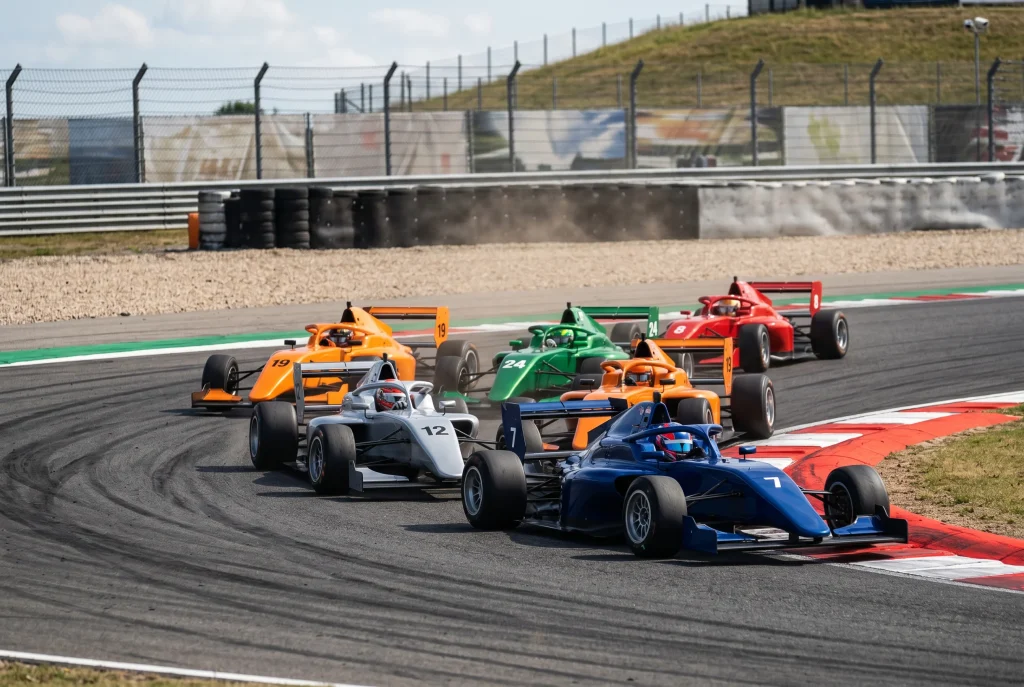
Why the midfield is where I make most of my money
Three seasons ago I stopped betting the front of the grid almost entirely. Not because the favourites stopped winning — they kept winning — but because the prices on the front-runners had become so efficient that there was no edge left to extract. The bookmakers know who is fast at the front. They are less certain about who finishes seventh versus tenth. That uncertainty is where the value lives.
The 16.7 million UK F1 fans, with 43% under 35 and 42% women, do not split their betting evenly across the grid. Most of the recreational money concentrates on the top three or four drivers. The motorsport betting market sitting at $8.6 billion in 2023 reflects that concentration — operators price the favourites tightly because the volume on them is enormous. The midfield receives a fraction of that attention, and the modelling that follows.
F1 Midfield Value Bets — More on this topic at where to bet on f1.
The pricing inefficiency in P6 to P10
The midfield in current F1 is roughly drivers in positions six through ten — sometimes extending to eleven and twelve depending on the weekend. Across the 2025 season, three drivers tied on seven wins each at the front, with the championship decided by countback at the final round on a two-point margin. Behind them, the midfield order shuffled almost every race. That shuffle is the punter’s opportunity.
Operators price each midfield driver against the assumption of an average finish. The actual variance is much larger than the price implies. A driver priced at decimal 6.0 for top-six finish might genuinely have a 25% probability — the price implies 16.7%. Across a long enough sample of similar bets, the gap is the punter’s expected value.
The catch is the variance. Midfield bets win less often per race than front-of-grid bets, but they pay more when they win. The bankroll discipline required to ride out 8-to-10 losing midfield bets in a row before a winner is harder than most punters manage. That difficulty is itself part of why the prices stay loose — most punters quit before the law of averages catches up.
Where to find the midfield mispricings
Five reliable sources of midfield mispricing recur season after season. They are not secrets — they are simply patterns that operators do not always price aggressively.
- Drivers in better cars than their results suggest, suppressed by reliability issues that have since been fixed
- Drivers at circuits historically suited to their car’s strengths (high-downforce, low-downforce, street, etc.)
- Rookies whose underlying pace exceeds their results because of penalties and incidents inflating their stat line
- Experienced drivers in their second season at a new team, where the chemistry-curve produces a step forward
- Drivers in cars with recent upgrade packages that have not yet shown in the live timing data
Each of these patterns produces price-versus-probability gaps that the front-of-grid markets do not offer. The work of identifying them takes thirty to sixty minutes per weekend — checking Friday and Saturday practice data, tracking team upgrade announcements, and comparing the current odds against a baseline expectation.
The team-level effect that shifts midfield prices
Midfield prices move on team-level news more than driver-level news. A floor upgrade, a new front wing, or a power-unit step changes both cars on the team at once. The price effect appears on both drivers, but recreational money usually flows to the higher-profile driver, leaving the teammate slightly underbet.
This produces the teammate-pick angle. When a team has clearly improved between rounds and the price on the lead driver has shortened, the teammate’s price often shortens by less than it should — because the public attention focuses on the lead driver. Backing the teammate to score points, finish top six, or beat a specific rival can deliver value that the lead-driver bet on the same upgrade no longer offers.
The 2026 calendar’s expansion to 24 races, with six Sprint weekends, multiplies these team-level opportunities. Liberty Media’s 2025 financials reported F1 revenue at $3.9 billion (up 14%) and team payments of $946 million (up 20%) — every team has more budget to develop, and the rate of mid-season upgrades has accelerated alongside the budget growth.
Live midfield betting — where the variance pays
The race-day in-play market on midfield positions sees less liquidity than the front of the grid, but the price movements are larger per unit of information. A safety car at lap 25 of 70 changes the midfield ordering more than it changes the front — front-runners usually have larger gaps and survive the restart in similar positions. Midfield drivers, separated by 0.5 to 1.5 seconds in race pace, can swap three or four positions in the chaos of a safety-car restart.
The 21% of UK online gamblers who place live bets — rising to 37% among 18-to-24-year-olds — produce the volume that makes these live midfield markets tradable at all. Without the live volume the prices would simply not exist. The trade-off is that liquidity dries up faster on midfield H2H matchups than on race-winner markets. A £100 stake on a midfield H2H in the final fifteen laps sometimes moves the price by 5% to 10%, where the same stake on race winner would not move the price at all.
Building a midfield-only bet stack
The most effective midfield approach I have used is a stack of three to five small stakes per weekend, distributed across uncorrelated bets. Three drivers to finish in the points, two H2H midfield matchups, perhaps a top-six bet on one driver with a circuit-specific case. Each stake is small — 1% to 2% of bankroll — and the variance is high enough that any single weekend can win or lose the whole stack.
The pattern across a 24-race season is what matters. A 35% strike rate at average odds of 4.0 produces a 40% return on stakes — the kind of edge that compounds across a season when the discipline holds. The race-by-race variance is enormous; the season-level variance is meaningful. Tracking the cumulative result is the only way to know whether the approach is working.
Why I keep coming back to the midfield
The midfield is where the F1 grid actually has competitive depth. Three drivers winning seven races each at the top in 2025 was historically unusual; the midfield shuffle behind them was historically normal. The 2026 regulation changes will likely produce another reshuffle of the midfield order, and the period of price inefficiency after a regulation reset is the most profitable phase for value-focused punters.
See also Wet Weather F1 Betting Tactics.
The work is unglamorous. Watching Friday practice for cars I am not betting on, tracking teammate performance gaps, modelling expected points totals — none of it has the appeal of backing the championship leader to win another race. But the EV is where the prices are loose, and the prices are loosest in the midfield. For a deeper look at how this thinking extends into specific points-finish markets, my piece on top six points finish betting in F1 covers the points-position end of the same pricing pattern.
Created by the "Apexodd" editorial team.
