
In-Play and Live F1 Betting: How Markets Behave Lights to Flag
 Available in US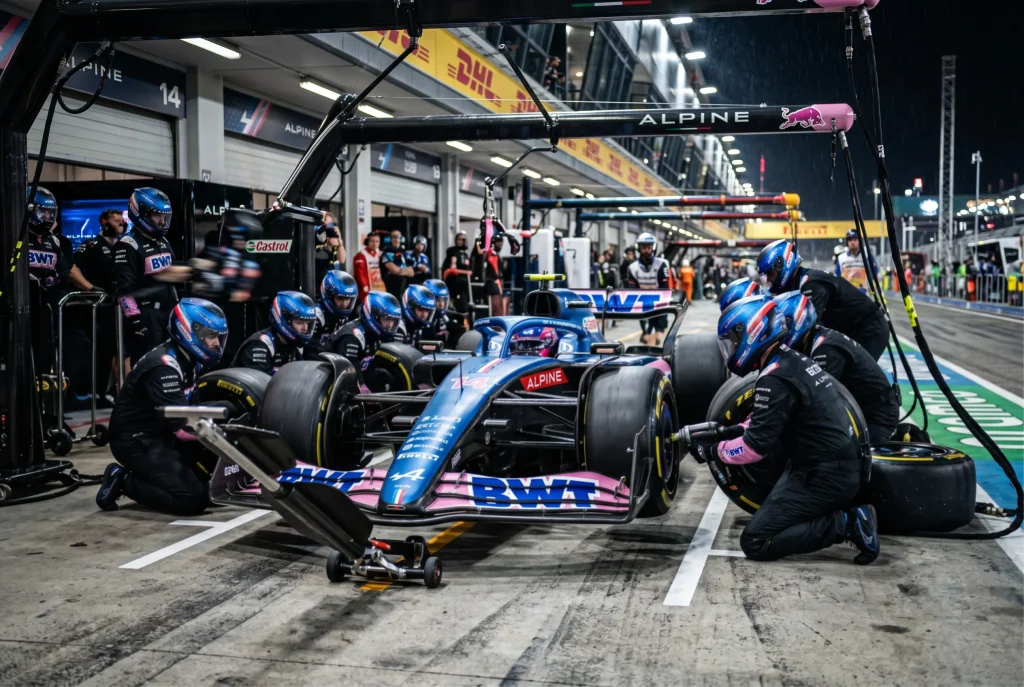
What in-play F1 actually means in 2026
Two hours of live betting is the most concentrated decision-making in motorsport wagering, and it’s also where I see the most money lost. In-play F1 demands two skills simultaneously — reading the race in real time and reading the market’s reaction to it — and the punters who do well at one but not the other usually end up worse off than if they’d just bet pre-race and walked away.
Around 21% of UK online gamblers placed live bets during sporting events in 2024, with that share rising to 37% among 18-to-24-year-olds. The market knows the audience exists. Bookmakers have invested heavily in live-pricing infrastructure to capture it, and live wagering has now overtaken pre-event betting as the leading global segment of sports betting. F1 is part of that shift, though it lags the football live-betting curve because the race-length window is shorter and the strategic complexity is higher.
What I’ll cover across the next nine sections is the lifecycle of a Grand Prix from a live-betting perspective. Pre-formation read, opening laps, mid-race strategy reveals, safety-car windows, the final stint, cash-out mechanics, in-play-only markets, latency and the information gap, and the common pitfalls that catch out punters who think live betting is just pre-race betting with shorter prices. The structure mirrors the race itself.
In-Play and Live F1 Betting — More on this topic at where to bet on f1.
Pre-Formation Lap: Last Pre-Race Reads
The fifteen minutes between the pit lane opening and the formation lap starting is the most underrated betting window of the F1 weekend. Most punters have already placed their bets by then. I find some of my best entries in those last few minutes, when one or two specific signals can confirm or kill a thesis.
The signals worth watching during this window: which drivers are running on which tyre compounds for the start, how the front-row drivers warm their tyres on the way to the grid, and whether any drivers are reporting issues over team radio that haven’t yet made it into the broadcast. Tyre choice matters most. A driver starting on the medium compound when the field is on softs has chosen a longer-stint strategy, which changes their race-winner probability and their podium probability differently depending on the circuit.
Bookmaker prices typically tighten by 5% to 10% in this window as the last casual money piles into favourites. Sharp punters use that to fade — taking the slightly longer prices on second-tier contenders before the live market opens fully. It’s not a high-edge play but it’s a consistent one over a full season of races.
One specific pre-formation read: drivers starting outside the top ten can choose their starting tyre freely under the 2026 rules, while top-ten qualifiers are tied to the compound they used to set their best Q2 time. That asymmetry creates strategic opportunities for midfield drivers, and the bookmaker’s pre-race market sometimes lags the implications. If a midfield driver has chosen the hard compound for the start, they’re committing to a one-stop strategy that could pay off if a safety car neutralises the field early. That’s a specific bet — slightly improved podium odds on that driver — that only becomes available in this window.
Opening Laps: First-Lap Incidents and Position Swings
The first three laps of a Grand Prix are the most chaotic minutes in F1 betting. The race result hasn’t settled, the strategic picture hasn’t emerged, and one bad start or one first-corner contact can flip the order entirely. Bookmaker prices reflect that chaos by widening dramatically during the opening lap.
A typical race-winner price moves 30% to 60% within the first two laps. The pole-sitter who took the lead cleanly might tighten from 2.20 pre-race to 1.65 by the end of lap one. The driver who lost three places off the line might lengthen from 3.50 to 8.00. Most of those moves are correct repricing based on new information, but a meaningful share are overreactions that correct back over the next ten laps.
Where the value lives in this window: drivers who recover positions in the opening laps but haven’t yet shown their true race pace. A driver who started fifth, took two places at the start, and is now running third behind the front-row qualifiers will see their race-winner price compress quickly. But their podium price might still be longer than it should be if the bookmaker’s model is still pricing them as a fifth-row qualifier. That gap is tradeable.
Settlement-wise, anything that happens before the safety car is deployed or the first safety-car-eligible incident occurs is part of the live race. There’s no “first-lap-only” pricing window. The market moves continuously, and your bet is filled at the price quoted at the moment you confirm it. Latency matters here — by the time you’ve decided to bet and the slip has confirmed, the price may have shifted again. More on that in the latency section.
Mid-Race: Strategy Reveals and Tyre Cliffs
The middle third of an F1 race is where strategy reveals itself. Pit stops happen, undercuts get attempted, tyre cliffs catch drivers out, and the live odds shake out of their early-race noise into something resembling the actual race outcome. This is the window where I do most of my live betting.
The two most-watched mid-race events are the first pit stop window and the tyre cliff for the starting compound. The first pit stop window — typically laps 12 to 18 on a 60-lap race — defines whether the race is one-stop or two-stop, and which drivers will undercut their rivals by pitting earlier. The bookmaker reprices race-winner odds aggressively when pit stops start, often shifting a driver’s price by 20% to 40% based on a single stop and the laptime they post on fresh tyres.
Tyre cliffs are the other big mid-race signal. Mark Hughes has written that tyre degradation is track-specific and that knowing where grip drops off lets you bet with confidence. That advice applies most directly to in-play windows. If you know that medium-compound tyres typically fall off at a specific lap count at a given circuit, you can anticipate the moment when a driver running long on mediums will start losing time hand-over-fist to drivers on fresher rubber. Bet ahead of that moment, not after.
The specific market that captures tyre-cliff trading: head-to-head between two drivers on different tyre strategies. A driver on a one-stop running older tyres versus a driver on a two-stop running fresher tyres. The head-to-head price moves predictably as the older-tyre driver approaches the cliff. Sharp punters back the fresher-tyre driver about three to five laps before the cliff hits, when the price still favours the older-tyre driver based on track position alone.
One mid-race trap to avoid. Position-based markets — top-six finish, top-ten finish — move less than race-winner markets during pit stops, because the bookmaker’s model knows that the final classification is what matters, not the intermediate positions. Don’t read the lack of price movement as the bookmaker missing the news. They’ve already priced the position outcome on a full-race basis. Live position swings during pit stops are mostly noise from a settlement perspective.
Safety Car and VSC Windows
Every safety car deployment in F1 is a betting event. Markets suspend, prices reset, and when they reopen the race is structurally different to what it was thirty seconds earlier. Knowing how to react to a safety car is one of the highest-leverage skills in live F1 wagering.
The first thing to understand: most UK books suspend in-play markets briefly when a safety car or virtual safety car is announced. The suspension typically lasts 30 to 90 seconds while the bookmaker’s traders reassess. During the suspension, no new bets can be placed and existing live bets cannot be cashed out. When markets reopen, the prices reflect the new race situation — usually a compressed field, an unexpected pit-stop opportunity for some drivers, and a different strategic question for everyone else.
The biggest pricing move during a safety car comes from the pit-stop maths. A safety car turns a normal 20-second pit stop into an effective 10-second or 12-second stop because the rest of the field is also slowed. Drivers who haven’t yet pitted gain a strategic windfall. Drivers who already pitted lose ground relative to those who pit under the safety car. Race-winner prices for un-pitted drivers can compress by 30% to 50% in a single safety car window.
Virtual safety cars work similarly but with smaller pricing moves. The pit-stop time saving under VSC is smaller — maybe 5 to 7 seconds — and the strategic shake-up is less dramatic. Most UK books treat VSC and full safety car the same way for market suspension, but the price reactions are different and worth knowing.
A specific market to watch during safety-car windows: the “next driver to pit” market, which some books offer in-play. Prices on this market are sharp and move quickly, but if you can read the strategic picture faster than the bookmaker — say, you know a specific driver was already at the limit of their stint length before the safety car — you can sometimes catch a price before the market corrects.
If you want to go deeper on the specific menu of safety car betting markets in F1, including the difference between yes/no, number-of-cars, and first-lap variants, I cover it in detail elsewhere.
The Final Stint: Where Cash-Out Tempts
The last fifteen laps of a Grand Prix are where most punters reach for the cash-out button. Sometimes that’s the right call. More often, it isn’t, and the reason is that bookmaker cash-out prices are calculated to favour the operator, not the punter.
Cash-out is a buyback offer. The bookmaker calculates what they think your bet is worth in current terms — based on the live odds at that moment — and offers to pay you that amount in exchange for cancelling the bet. The headline figure looks fair. The catch is in the margin the bookmaker adds to the calculation. A bet that the live market values at £45 might get a cash-out offer of £38, with the £7 difference being the bookmaker’s profit on the buyback.
That 15% to 20% haircut on cash-out value is consistent across the industry. It’s not negotiable. It’s not a sign of a “bad” book. It’s the structural cost of using cash-out as a service. Once you internalise that, you can make better cash-out decisions.
The cases where cash-out genuinely makes sense: when you have new information the live market hasn’t fully priced in, when your bankroll management requires locking in profit before the race resolves, or when your bet is on a driver who is now ahead but in a strategically precarious position. The cases where cash-out is a mistake: when you’re cashing out because you’re nervous rather than because the maths supports it, or when you’re cashing out the night before a settlement event because you don’t want to wait for the result.
Final-stint specifics. If your bet is on a driver running first with five laps to go, cash-out is rarely worth it because the bookmaker’s offer assumes some probability of a late safety car or mechanical failure that you’d be exposing yourself to by holding. If your bet is on a driver running second who just received a five-second time penalty that hasn’t been served yet, cash-out might be worth it because the live market is still pricing the driver at their current position rather than the position they’ll have after the penalty applies.
Cash-Out Mechanics and the Bookmaker’s Margin
The mechanics of cash-out calculation deserve a closer look because they explain why the offer always seems slightly worse than you’d expect. The basic formula is simple. Your potential return at settlement, multiplied by the current implied probability of the bet winning, minus the bookmaker’s margin.
Worked example. You bet £20 at 5.00 on a driver for race winner — potential return £100. With twenty laps to go, the driver is leading and the live race-winner price has shortened to 1.50. The current implied probability is 1 ÷ 1.50 = 66.7%. Your bet’s expected value at that moment, before margin, is £100 × 66.7% = £66.70. A typical bookmaker cash-out offer would be around £55 to £58 — the £8 to £12 gap being the operator’s margin on the buyback.
Partial cash-out is offered by most UK books on most markets. The mechanics are identical, just applied to a portion of the original stake. Cashing out 50% of a £20 bet means the bookmaker buys back £10 of stake at the current cash-out price, leaving £10 of stake to settle at the original price. Partial cash-out can be useful when you want to lock in some profit while keeping exposure to the upside.
Auto cash-out lets you pre-set a cash-out trigger price. When the live odds reach the level you’ve set, the bet automatically cashes out at whatever the offer is at that moment. The risk is that fast-moving prices can blow through your trigger before the book responds, leaving you with either an unwanted cash-out at a worse price or no cash-out at all. Auto cash-out is most reliable on slow-moving markets like outrights, less reliable on fast-moving live race-winner markets.
Markets That Only Open In-Play
Several F1 markets exist only during the race itself. They don’t trade pre-race, and they close as soon as the chequered flag drops. These in-play-only markets are where the bookmaker most directly competes with the punter’s real-time reading of the race.
The most common in-play-only markets: race leader at a specific lap, next driver to pit, next retirement, next overtake, lap-on-lap winner head-to-heads, and live fastest-lap markets. Each one has its own pricing logic, but they share a structural feature: they update in real time based on the race situation, and the bookmaker is reacting to the same events you’re watching.
The edge in these markets comes from speed of read. If you can identify a specific event likely in the next two to five laps before the bookmaker’s model catches up, you can sometimes find prices that the live market hasn’t fully repriced. Examples: a driver clearly losing pace because of tyre degradation but the live retirement market still pricing them long; a driver radioed in for a pit stop but the “next to pit” market hasn’t yet shortened them.
The structural problem with these markets is that liquidity is thin and stake limits are correspondingly low. A “next driver to pit” market might cap stakes at £50 or £100 per bet. That’s not enough to make these markets worthwhile for scale wagering, but it’s plenty for punters who treat live betting as engagement with the race rather than as a primary income source.
Latency, Live Timing and the Punter’s Information Gap
Every live bet you place is competing against a faster information source somewhere. The bookmaker’s trading desk has direct feeds from FIA timing. Professional syndicates have low-latency video feeds and real-time strategic models. You have a TV broadcast and possibly a live timing app. The gap between those information sources is measured in seconds, and it shapes everything about how live betting works.
The typical UK punter watching F1 on Sky Sports F1 is seeing the action with a delay of 5 to 8 seconds compared to the live timing feed. The bookmaker’s model is reading the timing feed in real time and adjusting prices accordingly. That means by the time you see something happen on screen, the bookmaker’s price has often already moved. Reacting to a TV broadcast event is reacting late.
F1 highlights on YouTube pulled around 25 million views in the UK alone in 2024 — second only to the US market on 31.5 million — which gives some sense of how much of the audience consumes the sport through delayed or asynchronous channels. Punters who rely on highlights or social-media-mediated reactions to live races are at an even bigger latency disadvantage than TV viewers.
The closest you can get to the bookmaker’s data feed is the official F1 live timing app, which gives lap times, sector times, gaps, and pit-stop confirmations roughly in line with the broadcast TV feed. The 2026 Sky Sports F1 record season of 162 million UK&I viewer-hours suggests the broadcast audience is bigger than ever, and the broadcast version remains the cleanest source for live timing for most punters. Compare F1TV’s live timing app against the broadcast, and use the gap to inform when the bookmaker has news you haven’t seen yet.
The practical implication: don’t try to outrun the bookmaker on raw speed. You will lose. Instead, bet on the strategic interpretation of events the bookmaker has seen but priced incorrectly. Strategic reads — “this driver’s pit window is closing”, “the rain is forecast for lap 35 not lap 50” — can deliver edge even when the bookmaker has the same raw data feed as you do.
Common In-Play Pitfalls to Avoid
I’ve watched plenty of punters lose money on in-play F1 bets that looked good at the moment but were structurally flawed. The patterns repeat. Three pitfalls account for most of it.
First, chasing losses with longer-priced live bets. A bet on the race favourite goes wrong, the punter reacts by backing a longer-priced driver in-play to “make it back”, and the second bet compounds the loss when it also doesn’t come in. The variance on longer-priced live F1 bets is high enough that this pattern is almost guaranteed to deepen losses over a season. The PGSI rate among 18-to-24-year-olds in the UK sits at 21.9%, with 5.3% in the highest at-risk band — figures that make clear why live wagering needs disciplined limits, especially for younger punters who are most exposed to the live segment.
See also UK Gambling Regulation for F1 Bettors.
Second, cashing out winners while letting losers run. The behavioural pattern — locking in small wins to feel safe while holding losing bets in hope of a recovery — is the opposite of what disciplined live betting demands. The mathematically right approach is to cash out when the bookmaker’s offer exceeds the bet’s expected value at current prices, regardless of whether the bet is currently up or down.
Third, treating in-play F1 like in-play football. The race-clock dynamics are different. Football has a ninety-minute window in which goals can shift the market sharply at any moment. F1 has a two-hour window in which the strategic structure is mostly set within the first thirty minutes. The biggest pricing moves happen at predictable points — pit stops, safety cars, weather changes — rather than as random shocks. Punters who bet F1 like football usually mistime their entries.
A fourth, less obvious pitfall: betting in-play because you’re already watching the race and feel you should be doing something. The “watching is boring without a bet” mindset is the most expensive habit in live wagering. If you have a specific strategic read, bet. If you don’t, watch the race without staking. The race is entertaining on its own.
Frequently Asked Questions
Created by the "Apexodd" editorial team.
