
Monza Italian GP Betting Strategy: Where Power Trumps Everything
 Available in US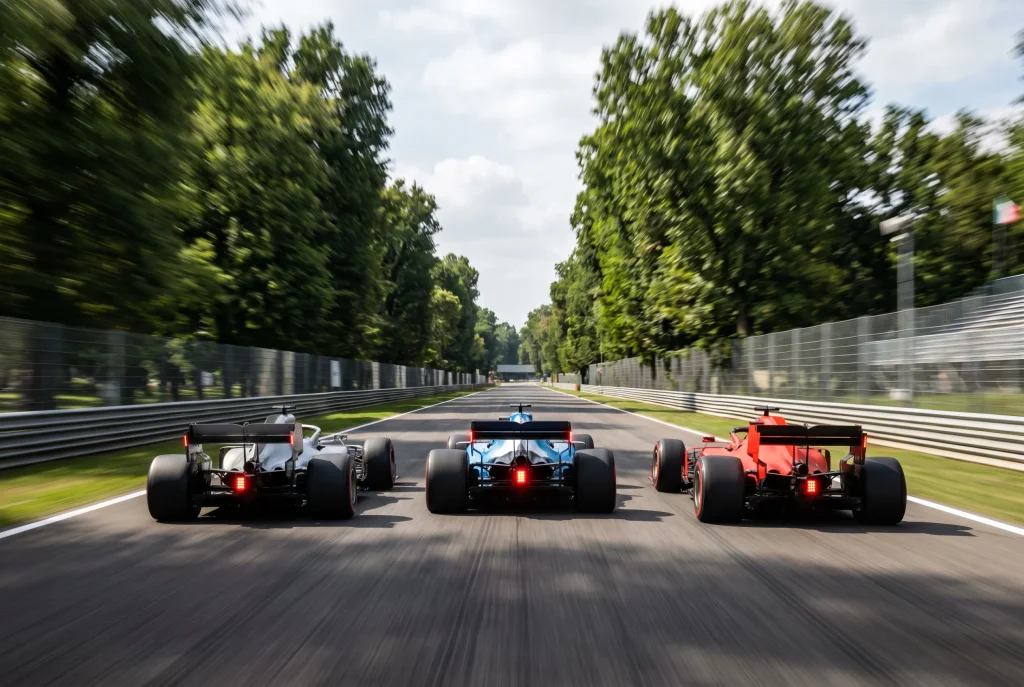
The temple of speed pays the cars with the strongest engine
Every year at Monza I bet differently than I do at any other circuit. The Italian Grand Prix rewards a specific car configuration — low downforce, peak power-unit performance — that does not transfer to most other rounds. Punters who price Monza the same way they price Spa or Silverstone miss the structural feature of the circuit: it is the most power-sensitive venue on the calendar. The car with the strongest engine starts the weekend 0.5 seconds per lap ahead of an equally good chassis with a weaker engine.
The 16.7 million UK F1 fans, with 42% women and 43% under 35, treat Monza as one of the high-engagement rounds of the season. The Italian Grand Prix is the second-oldest race on the calendar, with the crowd and the atmosphere amplifying the visibility of the result. The 28% of UK F1 fans who placed an online sports bet in the past year produce concentrated volume on Monza weekends, but the volume often chases the wrong drivers if the engine-performance hierarchy is not the punter’s primary input.
Monza Italian GP Betting Strategy — More on this topic at where to bet on f1.
The power-unit ranking and its predictive value
Monza has the longest cumulative full-throttle distance of any circuit on the F1 calendar — roughly 80% of the lap is spent at full throttle, against a season average closer to 60%. Every second at full throttle is a second where the power unit dictates the lap time. The chassis matters only for the four chicanes and the Parabolica.
The implication for betting is that the power-unit ranking — which manufacturer has the strongest engine in race-trim configuration — is by far the most important input for Monza. The chassis ranking, which dominates pricing at most circuits, is secondary at Monza. A car with a middling chassis but a top power unit is a Monza contender; a car with the season’s best chassis but a weaker power unit is not.
This produces visible asymmetries in the pricing. A driver who has dominated at Silverstone and Hungary — high-downforce circuits — may be priced as a Monza favourite by default. If their power unit is below the manufacturer hierarchy, the price is wrong. Conversely, a driver in a strong-engine team who has been quiet at high-downforce circuits may be the Monza value.
Slipstream effects and the qualifying chess game
Monza qualifying produces one of the most idiosyncratic dynamics on the calendar. The slipstream — the aerodynamic drag reduction from following another car on the long straights — is worth 0.3 to 0.5 seconds per lap. Drivers compete to find a slipstream provider on their flying lap, and the tactical positioning at the end of Q3 is famously chaotic.
The implication for pole-position betting is that the pole-sitter at Monza is sometimes not the fastest car in absolute terms — it is the car that found the best slipstream. The race-day pace and the qualifying pace can diverge at Monza more than at most circuits. A driver who qualifies on pole because of a slipstream advantage is not always the favourite for race winner; the race-pace order can be different.
The 78% of F1 fans wanting more Sprint rounds will not see a Monza Sprint in 2026 — the Italian round remains conventional. The single qualifying session is the only opportunity to read the qualifying-pace order, which makes the FP3 long-run data more valuable than usual for race-day predictions.
Overtaking probability — high but not random
Monza is one of the most overtaking-friendly circuits on the calendar. The DRS zones on the start-finish straight and the Curva Grande are long, the speed differentials between cars are large, and the run-off areas at the chicanes encourage attempts. Average overtakes per race at Monza run higher than the calendar median — historically 30 to 50 overtakes across the field.
The implication for betting is that grid position matters less at Monza than at restricted-overtaking circuits like Monaco or Hungary. A driver starting fifth at Monza has a meaningfully higher win probability than the same driver starting fifth at Monaco. The implied-probability gap can be 8 to 12 percentage points.
The pole-to-win conversion at Monza historically sits at 35% to 45% — substantially lower than Monaco’s 60% to 70%. The pole position is less decisive; the race outcome is more open to overtaking and strategy. Race-winner markets at Monza should be priced with this in mind — and the pricing on second-and-third row starters often is value because the public over-weighs the pole-position advantage.
Safety car probability at Monza
Monza’s safety car rate is moderate — roughly 35% to 45% across recent races. The chicanes produce occasional first-lap incidents (drivers cutting through the gravel or making contact at the apex), and the high speeds at Curva Grande and Parabolica raise the consequence-level of any incident. But the long straights also keep the field spread out, reducing the chance of multi-car incidents.
The safety-car-yes market at Monza is usually priced at implied probability of 40% to 50%, which roughly matches the historical rate. The market is one of the more efficient safety-car prices on the calendar. Value is harder to find than at higher-rate circuits like Monaco or Singapore.
Weather and the Italian summer pattern
Monza weather is more consistent than Silverstone or Spa, but not perfectly stable. The Italian summer can produce thunderstorms in early September, and a wet Monza race has historically produced more variance than a dry one — partly because the low-downforce setup makes the cars harder to drive in wet conditions, and partly because the slipstream effect that helps in the dry is irrelevant in the wet.
A wet Monza race shifts the betting pattern away from power-unit ranking and toward driver skill in low-grip conditions. The drivers who handle wet conditions well — across multiple seasons of evidence — become the value picks. The pre-race weather forecast is the trigger for shifting from the engine-dominated betting model to the wet-weather model.
The motorsport betting market projected to grow from $8.6 billion in 2023 to $22 billion by 2032 — a 156% expansion — will see more sophisticated weather-based pricing across the period. Monza’s weather variance is already partly priced in by major operators; the recreational money still under-prices the wet-shift, producing opportunities for punters who track the forecast carefully.
Italian sentiment and the home-team premium
The home-team premium at Monza is the smallest version of the home-driver premium I have seen anywhere. The Italian crowd’s passion does not translate into mispriced odds the way the UK crowd’s passion does at Silverstone. Operators do not adjust prices significantly for the Italian sentiment factor — perhaps because the global UK betting market is much larger than the Italian betting market, and the operator liability concentration on home-team picks is therefore smaller.
The practical implication is that home-team bets at Monza do not carry the same sentiment premium that British-driver bets carry at Silverstone. The value calculation is closer to pure pace analysis, with less of the sentiment-driven distortion that produces value-fade opportunities at the British round.
How I prepare for Monza specifically
My Monza preparation takes longer than for most rounds. I check the power-unit ranking based on the most recent races. I check Friday practice for long-run pace data — long stints on the medium and hard compounds tell me which drivers can manage tyres while pulling 230 mph down the main straight. I check the weather forecast carefully, and I delay my main bets until after Saturday’s qualifying because the slipstream dynamics can produce surprising pole-sitters.
See also Las Vegas GP Night Race Betting.
The bet stack at Monza is usually weighted toward race-winner with a strong-engine driver and a smaller stake on a top-six finish for a different driver with a strong-engine car in the midfield. The combination uses the same circuit-specific insight twice — at different prices for different outcomes. For a related view of how circuit-specific dynamics interact with race-day strategy across the calendar, my piece on Monaco Grand Prix betting strategy covers the opposite extreme — the low-overtaking, qualifying-decisive circuit that is the structural mirror image of Monza.
Created by the "Apexodd" editorial team.
