
Monaco Grand Prix Betting Strategy: The Circuit Where Saturday Is Everything
 Available in US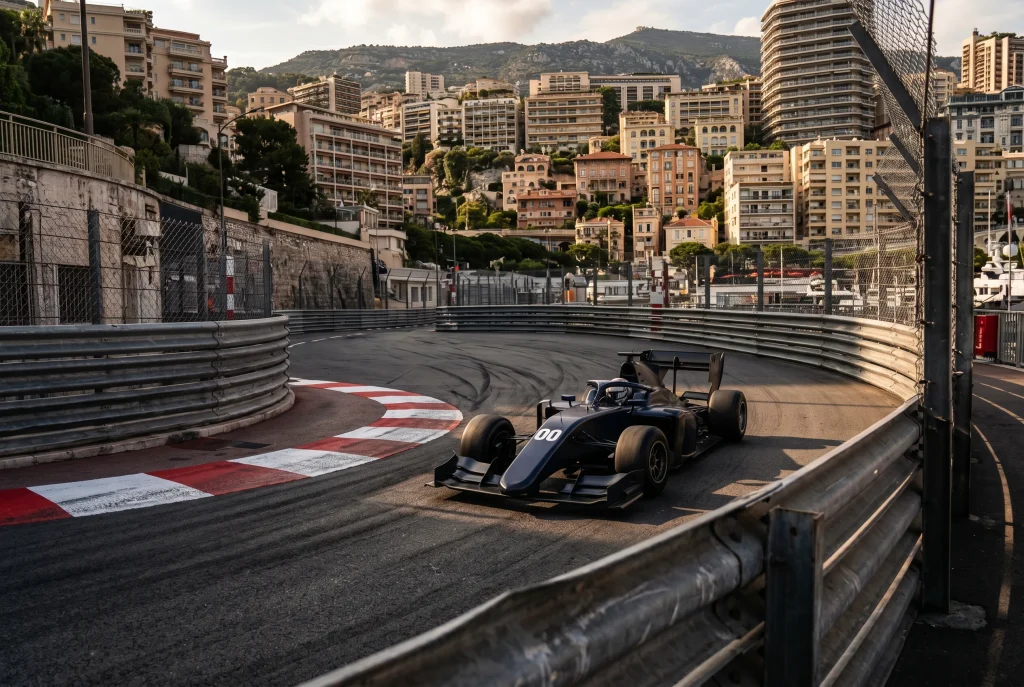
Monaco is the only race where qualifying is the race
I once watched a punter back the third-fastest car in Monaco qualifying for race winner at decimal 6.0 and lose by a lap on Sunday — not because the car broke, but because at Monaco you cannot overtake the cars in front. The Saturday afternoon result is, more than at any other circuit, the Sunday result. Every betting calculation for Monaco has to begin from this reality. The market knows it, but the casual money does not always act on it.
The 16.7 million UK F1 fans treat Monaco as a glamour event — it sits at the top of the casual-viewer engagement list each season. The 28% of UK F1 fans who placed an online sports bet in the past year produce concentrated volume on Monaco compared to most other rounds, but a meaningful share of that volume bets on dry-pace logic that does not apply to a circuit where overtaking is essentially impossible.
Monaco Grand Prix Betting Strategy — More on this topic at where to bet on f1.
The pole-to-win conversion that anchors every Monaco bet
Pole-to-win conversion at Monaco has been running at 60% to 70% across the last decade — the highest of any circuit on the calendar. The next-nearest circuits sit closer to 45% to 55%. The 15-to-25-percentage-point gap is what makes Monaco a fundamentally different betting proposition.
The arithmetic implication is straightforward. A driver on pole at Monaco priced at decimal 1.7 for race winner is offering implied probability of around 59% — which roughly matches the historical pole-to-win rate. A driver on pole priced at decimal 2.2 (implied 45%) is therefore underpriced relative to the pole position’s historical conversion. A driver on pole at decimal 1.5 (implied 67%) is fairly priced. The market does not always price these positions correctly, particularly when other factors — strategy questions, weather risk, a midfield car in the front rows — distort the standard pole-conversion baseline.
Where the Monaco-specific value lives
Three Monaco-specific value patterns recur across seasons:
- The second-grid-row premium. Drivers starting third or fourth at Monaco have historical race-win probability of 8% to 12%, against price-implied probability often closer to 15% to 20%. The recreational money overestimates the chance of a non-pole car winning.
- The safety-car-driven podium. Drivers starting fifth to seventh at Monaco have a meaningful safety-car-converted podium probability — around 10% to 14% — which is sometimes underpriced because the recreational market focuses on win probability alone.
- The strategy-window bet. Monaco’s narrow pit lane and impossible-overtaking layout means an undercut pit stop can change positions in a way that does not happen elsewhere. Drivers who have shown undercut-favourable tyre-management form can be value at podium-finish prices.
The 78% of F1 fans wanting more Sprint rounds will not get a Monaco Sprint — the layout cannot support the format reliably. Monaco remains a conventional weekend in 2026’s 24-race calendar.
Safety car probability at Monaco — the headline number
Monaco’s safety car deployment rate is the highest on the F1 calendar. Across the last ten Monaco GPs, eight have featured at least one full safety car — and three have featured multiple. The percentage at 80% across that sample is higher than any other circuit. The implication for the “safety car yes” market is direct: pricing on “safety car yes” at Monaco should sit at implied probability of 75% to 80%, which means decimal odds in the 1.25 to 1.35 range.
Operators usually price Monaco safety-car-yes markets tighter than other rounds because they know the rate. But the pricing is not always perfectly aligned. In weeks when the public attention is on another aspect of the race — driver storyline, championship stakes — the safety-car market can drift to value, particularly in the days before the race. Tracking this market across the Monaco build-up has produced reliable margin across multiple seasons.
The midfield-at-Monaco angle
The midfield-at-Monaco angle is one of the highest-EV patterns I track. Monaco’s qualifying layout — single-lap pace at low speeds, tyre warm-up in narrow corners, sensitivity to track evolution — sometimes produces qualifying surprises that do not appear at other circuits. A midfield driver with a strong qualifying record at Monaco specifically (separate from their general qualifying form) can be value at top-six or points-finish markets.
The 2025 season’s three drivers tied on seven wins each at the top, decided by countback on a two-point margin, demonstrated how single-race results matter — the midfield drivers who scored points at Monaco that year shifted the constructors’ championship picture meaningfully. The £596 million UK real-event betting handle in the most recent quarter (up 5% year-on-year) concentrates around marquee rounds like Monaco; the liquidity supports midfield bets at Monaco even when the prices are longer.
Practical pre-race Monaco workflow
My Monaco preparation runs across three sessions. Friday practice: long-run pace is essentially irrelevant — I only watch single-lap pace and Sector 3 (the slow-speed twisty section) times. Saturday morning final practice: this is where qualifying performance shows. Saturday qualifying: bet sizing increases dramatically once Q3 is complete — the race-winner market becomes a 70%-determined market.
The bet placement window is narrow at Monaco. The pre-qualifying race-winner market is essentially a pole-position market in disguise. The post-qualifying race-winner market is a function of the grid and the safety-car risk. The in-play market is volatile only during specific incidents — between incidents, prices barely move because positions barely change.
The cash-out market behaves differently at Monaco than elsewhere. A lead held at lap 20 is more valuable at Monaco than at any other circuit because overtaking is essentially impossible. Cash-out values on race-winner bets where your driver leads from pole tighten faster at Monaco than at a comparable circuit elsewhere. The temptation to cash out is greater; the discipline to hold is what produces the better long-run return, because the lead is genuinely more secure than the cash-out value implies.
The weather and incident overlay
Monaco weather is more predictable than Silverstone or Spa but not perfectly stable. The Mediterranean climate produces occasional rain showers that change everything because the circuit becomes unpassable in wet conditions. A wet Monaco race is roughly twice as likely to produce a non-pole winner as a dry Monaco race.
The incident dynamics are extreme. Monaco produces the highest first-lap-incident rate on the calendar — narrow corners, cold tyres, drivers fighting for position before the first DRS opportunity. The first-lap incident probability of around 20% per race is double the calendar average. This affects both the safety-car market and the race-winner market — a pole-sitter caught in a first-lap incident is suddenly out of the race that everyone assumed they would win.
The actionable conclusion: the pole-position implied probability of around 65% to 70% for race winner at Monaco is correct on dry weekends with the standard first-lap incident risk priced in. The same probability does not apply if the forecast turns wet or if the first-lap risk profile changes (cold-track conditions, mixed conditions at the start, etc.).
My Monaco bet stack
My typical Monaco weekend stack is three bets: a moderate-size race-winner bet on the qualifying favourite after Q3, a smaller safety-car-yes bet pre-race, and a small midfield top-six bet on a driver whose Saturday performance has been particularly strong. The stack runs roughly 60% on the race-winner, 25% on the safety car, 15% on the midfield. The Monaco-specific edge supports concentrating more stake here than at most other rounds.
See also Responsible Gambling and F1 Affordability Checks.
For a paired view of how the British Grand Prix dynamics differ from Monaco — both marquee European rounds but built on opposite circuit logic — my piece on British Grand Prix betting at Silverstone covers the high-speed-corner counterpart to Monaco’s slow-corner specialism.
Created by the "Apexodd" editorial team.
