
F1 Outright and Futures Markets: Long-Horizon Wagering Done Carefully
 Available in US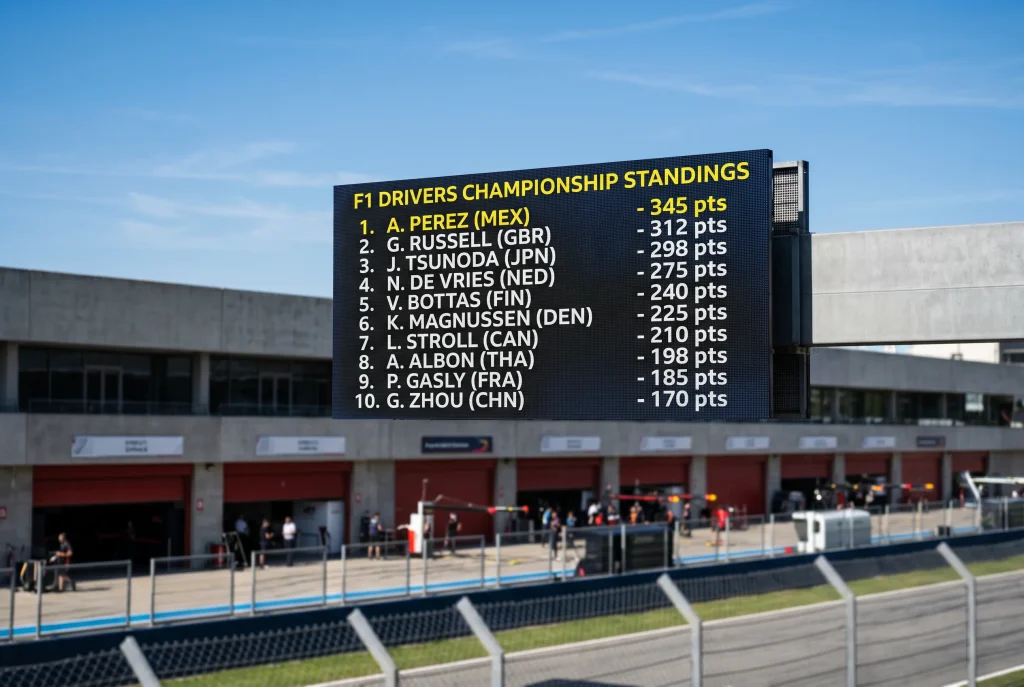
What makes a futures bet structurally different
A futures bet locks your stake for months. That single property changes everything about how you should think about the product. The cash sitting with the operator earns no return, cannot be redeployed if a better opportunity appears, and is exposed to the operational risk of the operator itself for the duration of the wager. None of those drawbacks apply to a single-race bet placed forty-eight hours before the lights go out.
The Liberty Media 2025 results showed F1 revenue at $3.9 billion (a 14% year-on-year increase) and operating income at $632 million (28% up). That growth has flowed through to sportsbook outright markets too — the volume placed on Drivers’ Championship and Constructors’ Championship futures has climbed alongside the broader audience, and the bookmakers’ pricing has tightened accordingly. The 2025 season ended with three drivers tied on seven race wins each and decided by a two-point margin after countback, which is exactly the kind of finish that produces both massive payouts for outright punters who hit and brutal lessons for those who missed by a single position.
F1 Outright and Futures Markets — More on this topic at where to bet on f1.
Outrights Versus Single-Race Markets
An outright is a championship-level wager: who wins the Drivers’ Championship, who wins the Constructors’ Championship, who finishes top three in either standings. A single-race market is a wager on a specific Grand Prix outcome. The two products share a vocabulary but operate on entirely different timescales.
The single-race wager is settled within hours of the race ending. The outright wager is settled when the championship is mathematically resolved, which is typically the final round or the round before. The intervening period — anywhere from three months for a mid-season bet to twelve months for a pre-season bet — is the locked-stake window.
The pricing structure is also different. Single-race outright markets carry overround around 110% to 115%. Championship outrights typically carry overround around 120% to 140%, with wider margins on Constructors’ Championship than on Drivers’ Championship at most operators. The wider overround reflects modelling uncertainty across a long horizon, but it also means the punter is paying a higher implicit fee for the privilege of long-term exposure.
How Outright Prices Evolve Through a Season
Outright prices move continuously across a season. The pre-season price reflects pure expectations: car-development assumptions, driver-pairing changes, regulatory shifts, team funding. As races run, the prices update based on actual results, until by mid-season the prices are dominated by current-form data and only marginally influenced by pre-season expectations.
The biggest single moments of price movement are pre-season testing, the opening race, and the summer break recalibration. Pre-season testing rarely moves prices more than 15% to 20% because the lap-time data is noisy. The opening race can move prices 40% to 60% in either direction for drivers who substantially outperform or underperform expectations. The summer break is the structural inflection point — operators reassess the championship picture across the break and reset prices for the second half.
The implication for punters is that the same outright selection can be priced very differently at different points in the season. The best entry point is rarely pre-season; it is usually mid-season after a specific result has temporarily mispriced a contender. The pre-season price compensates the operator for twelve months of risk; the mid-season price for half that.
The Locked-Stake Problem
The locked-stake problem is the most under-discussed aspect of outright betting. A £100 stake on Drivers’ Champion placed in February is not just exposed to the championship outcome — it is also unavailable for any other use until December. That includes single-race opportunities, value bets that emerge during the season, and any other deployment of capital.
The opportunity cost is real. If your typical season generates 8% return on cycled stake through single-race betting, a £100 locked for ten months represents around £6 to £7 of foregone return. That cost should be subtracted from the expected value of the outright wager itself before you decide whether the price is attractive.
The other dimension of the locked-stake problem is regulatory. The affordability framework introduced in 2025 considers net deposits over rolling 30-day windows, but locked outright stakes count against your available balance for the duration of the wager. A £200 outright bet placed in February reduces your effective bankroll for the rest of the season, which can affect both your single-race options and your aggregate deposit pattern.
Dead-Heat and Countback Rules
Championship dead heats are rare but not impossible. The 2025 season produced three drivers tied on seven race wins each, decided by a final-round countback that left a two-point margin between first and second. Had the points totals also tied, the FIA’s countback procedure would have resolved the title — and the bookmaker’s dead-heat rules would have determined the betting settlement.
The standard dead-heat rule on UK outrights settles the bet by paying out at half stake at full odds if two drivers tie. So a £100 bet at 5/1 on a dead-heat winner pays £100 stake plus £250 profit (5/1 returns on £50), with the other £50 stake returned. This is the same rule that applies in horse racing dead heats.
Where it gets complicated is when FIA countback resolves what looks like a tie. If two drivers finish on the same points total but countback awards the championship to one of them, the bookmaker normally settles the outright on the official FIA result — not on the underlying points tie. Your bet either wins fully or loses fully; there is no dead-heat partial payout. The 2025 title finish illustrated this precisely — the final standings produced one official champion despite the closeness.
Mid-Season Antepost Bets
Mid-season antepost — placing an outright bet during the summer break or after a specific race produces a value opportunity — is the most analytically defensible outright strategy. The information advantage is real: you can see how the cars are performing, how the drivers are handling pressure, how reliable the various contenders are.
See also Constructors Championship Betting.
Outright and futures markets are a defensible part of an F1 betting portfolio when the locked-stake cost is factored in honestly. Pre-season bets carry the highest opportunity cost; mid-season antepost bets the lowest. Treat outrights as long-horizon investments with their own risk profile, not as upgraded versions of single-race bets. For more on how tied finishes settle on these markets, see my piece on the countback rule on F1 outrights.
Written by the editors at Apexodd.
