
Head-to-Head Driver Matchups: A Punter's Practical Manual
 Available in US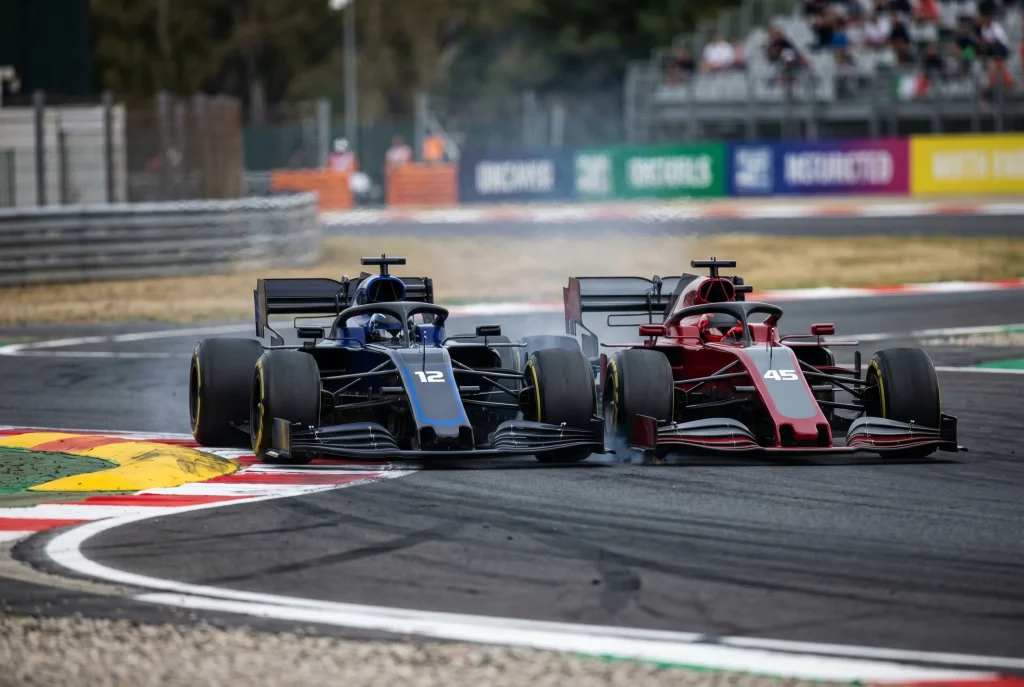
Head-to-heads strip team variables down to driver pace
The head-to-head market is the closest F1 betting product to a pure assessment of two drivers against each other. Take out the team-quality variable, take out the position-on-grid variable, take out most of the strategy noise — what is left is who beats whom over the weekend. That clarity is exactly what makes H2H markets analytically powerful and operationally underused.
The growth in F1’s audience over the past five seasons — 43% of the fanbase is now under 35, and 42% are women — has driven operators to expand the H2H menu across the calendar. Almost every Grand Prix weekend now offers multiple H2H matchups: teammate-vs-teammate is the staple, but cross-team matchups, multi-race series matchups, and qualifying-specific H2H lines have proliferated. Each carries its own pricing pattern, and treating them as one homogeneous product is the most common mistake I see among punters new to the format.
Head-to-Head Driver Matchups — More on this topic at where to bet on f1.
Qualifying H2H: Cleanest Single-Lap Read
Qualifying head-to-head is the analyst’s favourite betting product in F1 for a simple reason: it isolates single-lap pace from race-day chaos. Two drivers, one Saturday session, the faster lap wins. There is no strategy variable, no DRS-train pollution, no safety car influence. The signal-to-noise ratio is the highest of any betting product on the weekend.
The standard qualifying H2H market settles on the finishing classification of the session — Q3 if both drivers reach it, Q2 or Q1 otherwise depending on who exits where. The settlement rules vary at the edges. If one driver fails to set a representative lap (mechanical issue, red-flag interruption, weather disruption), most operators default to the highest classification reached. A few apply void-and-refund rules in specific circumstances.
The pricing structure on qualifying H2Hs is unusually tight — typical overround sits around 3% to 5% per matchup, compared with 10% to 15% on race-winner markets. The reason is competition: experienced punters concentrate on qualifying H2Hs precisely because the signal is clean, and operators have to price tightly to remain competitive. That tightness eliminates most of the obvious mispricings but it also means small modelling advantages compound quickly into measurable returns over a season.
Race H2H: When Strategy Distorts the Outcome
Race H2H markets are messier than qualifying H2H because the strategy layer dominates the outcome. Two evenly-matched drivers in similar cars can finish multiple positions apart purely because of pit-stop timing, safety-car luck, or undercut decisions made by their respective race engineers.
The implication for pricing is that race H2H markets carry wider overround than qualifying H2H — typically 6% to 10%. The implication for punters is that the analysis required is different. Single-lap pace matters less; strategy preferences, tyre management style, and team operational reliability matter more. The driver who is consistently the faster qualifier within a team is not always the driver who finishes ahead more often on Sundays, because the engineer’s strategic choices can flip the comparison.
The most reliable race H2H pattern across recent seasons has been the “first-stop sacrifice” effect. Drivers whose teams habitually pit them first in two-stop races tend to lose more H2H matchups than their pace would predict, because the second-pit driver gets the cleaner air on fresh tyres. Spotting which driver is the strategic favourite within each team is one of the more useful preparation tasks for race H2H betting. The fanbase growth — 43% under 35, 42% women — has accelerated H2H market liquidity, but the analytical depth required to extract value has not been democratised at the same rate.
Season-Long Teammate Head-to-Heads
The teammate H2H over a full season is one of the most strategically interesting markets in the F1 calendar. The price reflects the bookmaker’s best estimate of which driver in a team will outperform across all rounds — measured by finishing position when both finish, plus a tie-breaker for retirements and disqualifications.
The settlement rule on season-long teammate H2Hs varies. The most common is “highest finisher in each race scores a point, season totals settle”. A driver who outscores their teammate in fourteen of twenty-four races wins the H2H regardless of championship position. The second common rule is “season points total wins” — which slightly favours drivers whose finishes cluster in the top six rather than producing a wide distribution.
The 2025 season produced 16.7 million F1 fans in the UK with the under-35 cohort growing fastest, and a measurable share of those fans gravitated to season-long teammate H2H markets as their season-narrative engagement product. Operators price these markets aggressively in pre-season because they generate stable customer engagement across the full year — which means the value usually sits in the markets where the bookmaker’s pre-season modelling has missed an emerging pace differential between teammates.
Cross-Team Matchups and Their Hidden Variables
Cross-team H2H — Driver A from Team X versus Driver B from Team Y, single race or season-long — introduces team-pace variance as the dominant factor. The driver from the faster car has a baseline advantage that single-driver pace alone cannot overcome. Operators price this by treating the cross-team matchup as effectively a “team quality” bet wrapped in driver names.
The interesting cross-team H2Hs are those between drivers whose teams have similar pace profiles. If Team X and Team Y are typically within 0.1 seconds of each other on race pace, the matchup becomes about the drivers themselves rather than the cars. These are where genuine driver-skill judgments produce the cleanest betting outcomes.
The other category worth attention is asymmetric cross-team H2H, where one driver is in a clearly faster car and the price reflects that. The value comes from identifying when the underlying assumption no longer holds — when an upgrade has equalised the car-pace gap, or when the slower-car driver has the strategic luxury to take risks the favourite cannot afford.
A Worked Teammate H2H from 2025
Over the 2025 season the three drivers tied on seven race wins each — Norris, Verstappen, and Piastri — produced one of the closest competitive scenarios in modern F1. Inside the Norris-Piastri pairing specifically, the qualifying H2H came down to a single-digit gap, and the race H2H tracked even closer. Punters who priced the H2H on the standalone driver-pace question rather than on the championship narrative captured meaningful edge over the public price across the season.
See also Safety Car Betting Markets.
Head-to-head markets are the most analytically rewarding product on the F1 sportsbook. Qualifying H2H is the cleanest signal, race H2H the most strategy-dependent, season-long teammate H2H the most narrative-resilient. Each requires a different analytical lens. For more on how the underlying market structure of F1 betting connects to these matchup products, see my deeper survey of F1 betting markets explained.
Published by the Apexodd team.
